Share your story and shine at JK Monitor!🌟 Welcome to JK Monitor, where every story matters and every achievement is celebrated! We invite you to share the remarkable journey of your life and showcase your accomplishments to the world. Join our exclusive interviews that honor exceptional individuals just like you.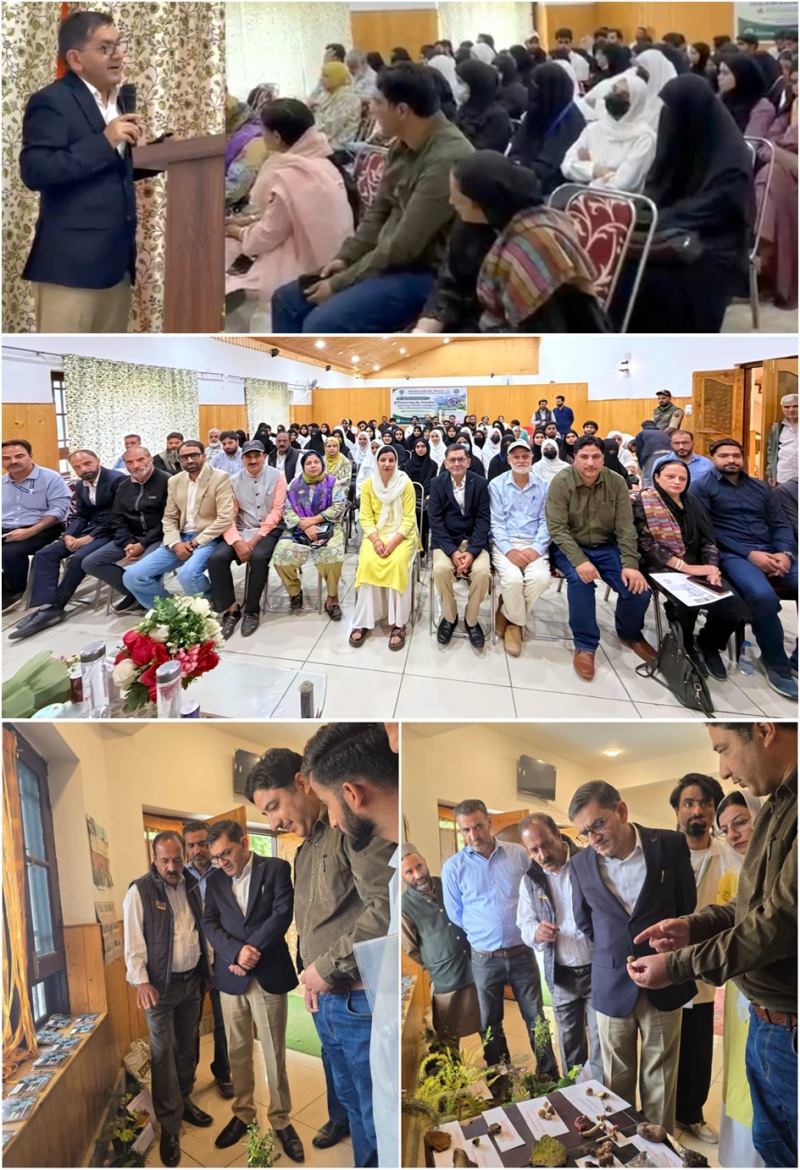
SRINAGAR: With the Kashmir Himalayas facing growing ecological pressures, the CSIR-Indian Institute of Integrative Medicine (CSIR-IIIM), Branch Laboratory Srinagar, organised a one-day outreach programme at its Field Station in Verinag on Tuesday to raise awareness about the conservation of critically endangered flora and the need to protect the region’s rich plant diversity.
The programme, titled “Preserving the Paradise: Conserving Critically Endangered Flora of the Kashmir Himalayas,” was organised under the CSIR Mission Mode Project Bioresource Conservation and Prospection (BioCaP).
The initiative brought together scientists, forestry experts, Forest Department officials and students to encourage greater understanding of native plant species and their ecological and medicinal importance.
Director, CSIR-IIIM Jammu and CSIR-NBRI, Dr Zabeer Ahmed, attended the programme as the chief guest. In his address, he stressed the importance of creating awareness among the younger generation about the responsibility of conserving natural resources.
He also highlighted the wider relevance of India’s traditional knowledge, particularly in the field of medicinal and aromatic plants, and the need to connect this knowledge with contemporary scientific research.
He said conservation efforts should not remain confined to protecting plant species alone, but should also contribute to preserving the knowledge systems and potential applications associated with these bioresources.
A key component of the programme was an interaction with Forest Department officials under the “Know Your Forests” initiative. The session provided participants an opportunity to understand the importance of forests, threats to native vegetation and the role of local stakeholders in conservation.
The “Tree Talk” activity further introduced participants to native plant species, encouraging students to observe and understand the floral diversity around them rather than viewing conservation only as a classroom subject.
The programme also included a Conservation Innovation Challenge, aimed at encouraging young participants to think of practical and innovative solutions for protecting plant biodiversity.
Another attraction was the “Healing with Nature” segment, where medicinal plants and their healthcare applications were showcased. The initiative highlighted the close relationship between the region’s plant resources, traditional knowledge and modern scientific research.
Students from different colleges also participated in the outreach activities, providing them with an opportunity to interact with scientists, forestry experts and field officials and learn about the conservation challenges facing the Kashmir Himalayas.