

 Share your story and shine at JK Monitor!🌟 Welcome to JK Monitor, where every story matters and every achievement is celebrated! We invite you to share the remarkable journey of your life and showcase your accomplishments to the world. Join our exclusive interviews that honor exceptional individuals just like you.
  LONDON/JAMMU: For years, the United States has been the preferred destination for Indian students, but the scale and shape of that movement has changed. According to the latest Open Doors 2025 report , India now dominates the landscape. Indian students make up nearly a third of all international enrolments in the US, reaching 363,019 in 2024/25, a year-on-year increase of 9.5 per cent.
The first noticeable shift is where the ambition is coming from. It is no longer only the metros filling the international classrooms. Prodigy Finance’s own student data shows a clear rise in applicants from Tier 2 and Tier 3 cities, a trend we have tracked consistently over the past two years.
Students from places such as Indore, Bhubaneswar, Punjab, Surat, Coimbatore, Mysuru, Nagpur and across parts of Northeast India are now applying in far greater numbers than before. Many come from families of teachers, small business owners and mid career professionals, and their share of US bound applications is growing faster than that of the major metros. The aspiration has widened, and so have the routes available to students.
The pull of the US remains clear, even as students consider multiple destinations. Across all nationalities, the country hosted 1,177,766 international students in 2024 and 2025, up by 4.5 per cent. India stands out further because of its academic choices: 43.4 per cent of Indian students are in mathematics and computer science, and 22.8 per cent in engineering, according to Open Doors and India-specific datasets. Seven in ten Indians in the US now sit in STEM classrooms. That concentration has kept demand steady even as new enrolments globally show mixed patterns..
Another shift is visible in the way Indian students are using work linked pathways in the United States. Optional Practical Training has become central to this transition. According to the US Department of Homeland Security OPT is the main bridge for international graduates entering the American workforce. The Open Doors 2025 India data points to rising participation among Indian postgraduates, particularly those in STEM programmes where extended OPT periods are available. A larger share of Indian master’s and doctoral graduates are choosing to remain in the US through OPT to gain early professional experience and strengthen their long term career prospects before moving to routes such as the H 1B or other work categories.
Sonal Kapoor, Global Chief Business Officer at Prodigy Finance, says the shift is visible in the questions students ask. “Students still see the United States as the place where academic depth meets career possibility. Even when they explore countries like the UK, Germany, Australia or the UAE, the American option sits at the centre. What has changed is who is applying. We’re hearing from students in smaller cities who have done their research, understand the timelines and are much more informed about STEM pathways, OPT and financing.”
She adds that this change is reflected in application patterns for Spring. “Demand has been strong enough that we opened our Spring 2026 cycle earlier than usual. Students are planning ahead, and the Spring pathway is becoming a serious alternative to the traditional fall intake”
Despite rising interest in other destinations, the academic draw of the US remains unchanged. States such as California, New York, Texas, Massachusetts and Illinois continue to be some of the most picked destinations by Indian students.
Taken as a whole, these shifts sketch out a more grounded American dream. It begins in smaller cities, takes shape in STEM courses and early work experience, and relies on clearer steps into life after university. The appeal of the US is familiar, yet the students powering this growth represent a changing India confident, broad-based and focused on building a future that matches their ambition.
About Prodigy Finance
Founded in 2007, Prodigy Finance is an international student lender that has helped over 45,000+ international master's students attend the world's top universities. To date, Prodigy has disbursed over $2.3 billion in funding to students from more than 150 countries. Prodigy Finance is fueled by impact investors and other privately qualified entities who invest in tomorrow's leaders while earning a financial and social return. Prodigy's borderless lending model enables students to apply for a loan based on their future earning potential and not just their current circumstances and credit history.
- Prodigy Finance Ltd is authorised and regulated by the Financial Conduct Authority in the United Kingdom.
- Loan offers are subject to our eligibility, funding, and credit assessment criteria.
- Loan amounts are subject to the cost of attendance limits set by schools.
- 28% APR representative variable, based on a total credit amount of USD 41,600 (USD 40,000 amount borrowed + 4% admin fee), repayable over 180 months at a variable interest rate of 11.38% (7.2% fixed + 4.18% variable). Monthly repayment of USD 620.15. Total interest payable USD 70,026.16. Total amount payable USD 111,626.16.
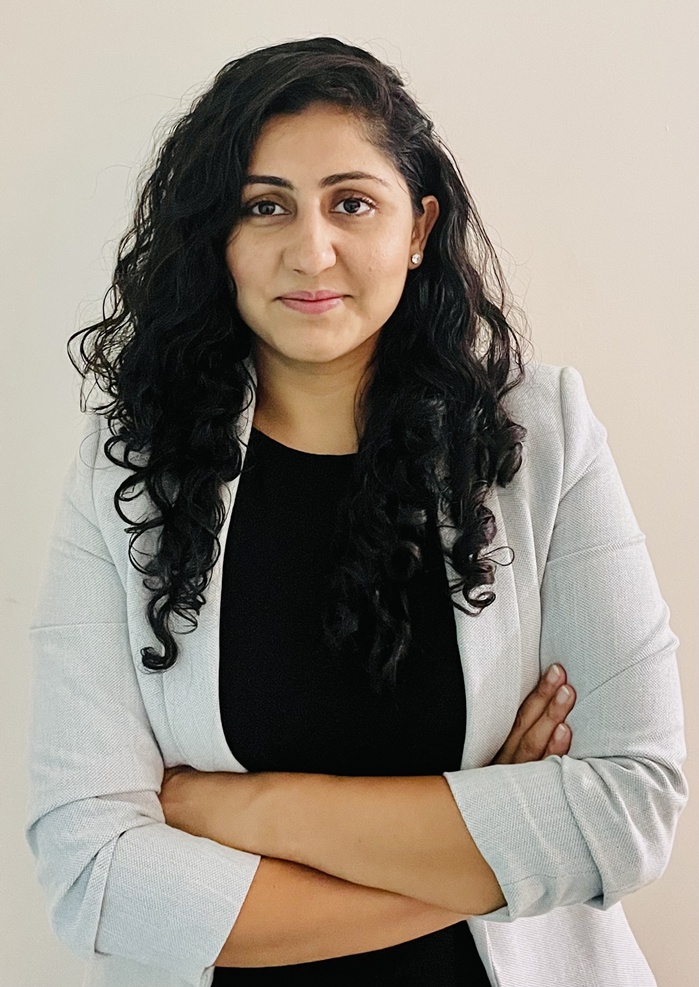 Sonal Kapoor, Global Chief Business Officer at Prodigy Finance, said, "To date, Prodigy Finance has funded more than 45,000 international master’s students and disbursed over USD 2.3 billion in education loans. A large share of these learners comes from India, which continues to be one of our strongest and most active markets.
The students we support choose a wide range of postgraduate programmes. STEM remains the strongest pull, with computer science, engineering, Machine Learning, data science, and robotics leading the way. Business programmes such as MBA, finance, and business analytics continue to attract many applicants.
We are also seeing steady interest in fields like public policy, healthcare, and LLM, showing how broad and ambitious Indian students have become. These programmes span leading universities in the United States, the United Kingdom, France, Germany, and many other destinations across the 150 countries we support.
Students often tell us that one of the biggest turning points in their journey is access to no-collateral, no-cosigner education loans. For many families, this removes the pressure of tying property or savings to a child’s dream.
It gives students the freedom to step into the world on their own merit and pursue the degree that matches their potential. This is why so many first-generation learners and students from smaller cities are now able to see global education as a real possibility."
STUDENTS QUOTES:
Prachi Mahapatra: The University of Texas at Arlington - College of Business Professional: Security Product Manager -Cisco: Coming from Bhubaneswar in Odisha, pursuing advanced opportunities in cybersecurity and quantum-safe technologies initially felt like a distant dream. I did not grow up with extensive networks, global exposure, or mentors who had navigated this path before. Yet, I was driven by a desire to make meaningful contributions to my field and to take on challenges that extended far beyond my immediate environment. Through persistence, guidance, and strategic learning, I was able to chart a path that transformed both my skills and my impact.
This journey shaped my approach to cybersecurity, enabling me to lead initiatives that enhance the security of critical U.S. infrastructure, including government, healthcare, financial, and educational networks. My work in XDR, threat intelligence, network security, and quantum-safe frameworks has measurably strengthened public safety, operational resilience, and trust in essential U.S. digital systems. It demonstrates that where one comes from does not limit the ability to make nationally significant contributions. With determination, vision, and innovative methodologies, I have built solutions that address some of the most urgent cybersecurity challenges facing the United States, advancing both technology and national security.
Looking forward, my future roadmap is focused on scaling these innovations to maximise national benefit. This includes the continued deployment of next-generation XDR capabilities, leveraging Agentic AI for proactive threat detection, autonomous incident response, and accelerated investigation of complex attacks across multiple sectors. I am also expanding the adoption of quantum-safe frameworks nationwide, helping U.S. organisations transition securely to post-quantum cryptography in alignment with NIST and CNSA standards.
These efforts will not only strengthen the resilience of critical infrastructure but also set a replicable model for the broader cybersecurity industry, spreading innovative methodologies that improve threat detection, operational efficiency, and national preparedness. By continuing to combine technical innovation, operational leadership, and policy-aligned strategies, I aim to ensure that the United States maintains a secure and resilient digital environment against current and emerging cyber threats.