

 Share your story and shine at JK Monitor!🌟 Welcome to JK Monitor, where every story matters and every achievement is celebrated! We invite you to share the remarkable journey of your life and showcase your accomplishments to the world. Join our exclusive interviews that honor exceptional individuals just like you.
 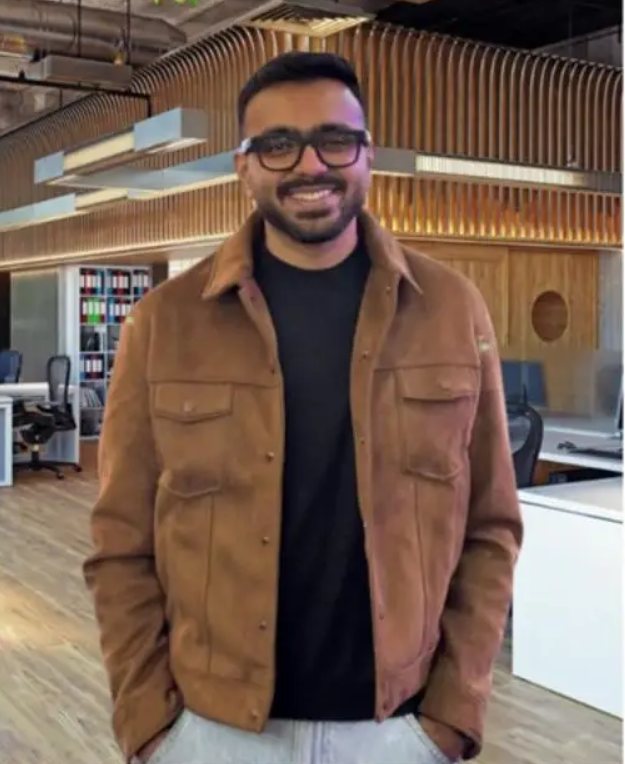 Every year, millions of Indian families treat one decision, the choice of stream after Class 10, or the choice of college after Class 12, as if it will hold for the next forty years of working life. It rarely does. In nine years of doing career counselling in India, guiding students and professionals through career decisions, the pattern I see most often is not bad choices. It is the belief that a career decision, once made, does not need to be revisited.That belief is now actively dangerous.
The job market that Indian graduates join today has experienced more change in the past three years than it had in the preceding 15 years. The EY study conducted in 2025 found that IT jobs for entry-level candidates have fallen 20 to 25% in India due to the advent of automation, even though according to Nasscom, the number of people employed in the technology sector continues to grow at a slower pace than previously. It is important to understand that these two phenomena are not mutually exclusive.
I think about career development the way I think about health. Nobody does a single check‑up at 17 and assumes they are covered for life. Health needs monitoring, adjustment, and course correction as circumstances change. Careers need exactly the same discipline, and most Indian professionals have never been taught to apply it.
This shows up earliest at the student stage, where the cost of a single, unexamined decision compounds the longest. Even in today’s scenario, career planning in India takes place in a hurry, usually in the period following the declaration of board exam results, due to the pressures of grades, family expectations, or just what everyone else in your peer group is deciding on. In truth, this process needs to start years ahead, based on exposure to true options, exposure to actual people in these professions, and an honest discussion of one’s suitability.
The mistake does not end at the first job. It continues through the early career, where I see working professionals treat their first role, first company, or first specialisation as a fixed identity rather than a starting point. The 2026 India Skills Report puts overall graduate employability just above 56%, the highest in years. But employability is not a one‑time score. It has to be re‑earned every few years, because the skills that made someone employable at twenty‑two are rarely the same skills that keep them employable at 32. What employers are actually screening for has shifted too, and not in the direction most people expect.
However, there was an assumption that the ability to use technology, especially AI, has become the differentiating factor. It certainly is helpful, but it is not necessarily the factor that separates people. The message I get from the interview teams on multiple occasions is a lack of judgment, ability to define a problem properly, formulate a solution effectively, and understand whether the outcome of using the technology requires human intervention. There is support for this in recent surveys conducted in the field that demonstrate the growing gap in such skills as communication, critical thinking, and collaboration among others despite stable or improving technical capabilities. Technology can create solutions. Technology cannot decide which one matters.
And here lies the place for upskilling to take its due form – not as a buzzword, but as maintenance. The experts who keep up-to-date are generally never those who went through just one certification and stopped there. They are the ones who view training as an ongoing process that has something to do more with the direction the market is taking rather than the one it is coming from. Just like mentorship does, which again is the least done part of the entire process.
None of that implies delegating the process of judgment to a tool. Artificial intelligence technology might extend the range of alternatives for a student or a specialist; besides, it might eliminate some barriers in considering those alternatives. However, the thing it cannot do is tell a person what he wants and how much compromise he is ready to accept. This is a human prerogative.
The single biggest mistake I see in career planning, at every stage, is treating it as an event rather than a practice. The student who picks a stream and never revisits the assumption behind it. The professional who took a certification once and considers the box checked. The organisation that assumes hiring for today's skill gap solves tomorrow's. Careers, like health, reward the people who check in regularly, not the people who check in once and hope for the best.
India does not have a shortage of ambition. What it has is a shortage of the habit of re‑examining a career decision before it becomes a crisis. Building that habit, at the student stage, in the first job, and every few years after, is the single most useful thing we can teach anyone entering the workforce today.