Share your story and shine at JK Monitor!🌟 Welcome to JK Monitor, where every story matters and every achievement is celebrated! We invite you to share the remarkable journey of your life and showcase your accomplishments to the world. Join our exclusive interviews that honor exceptional individuals just like you.
 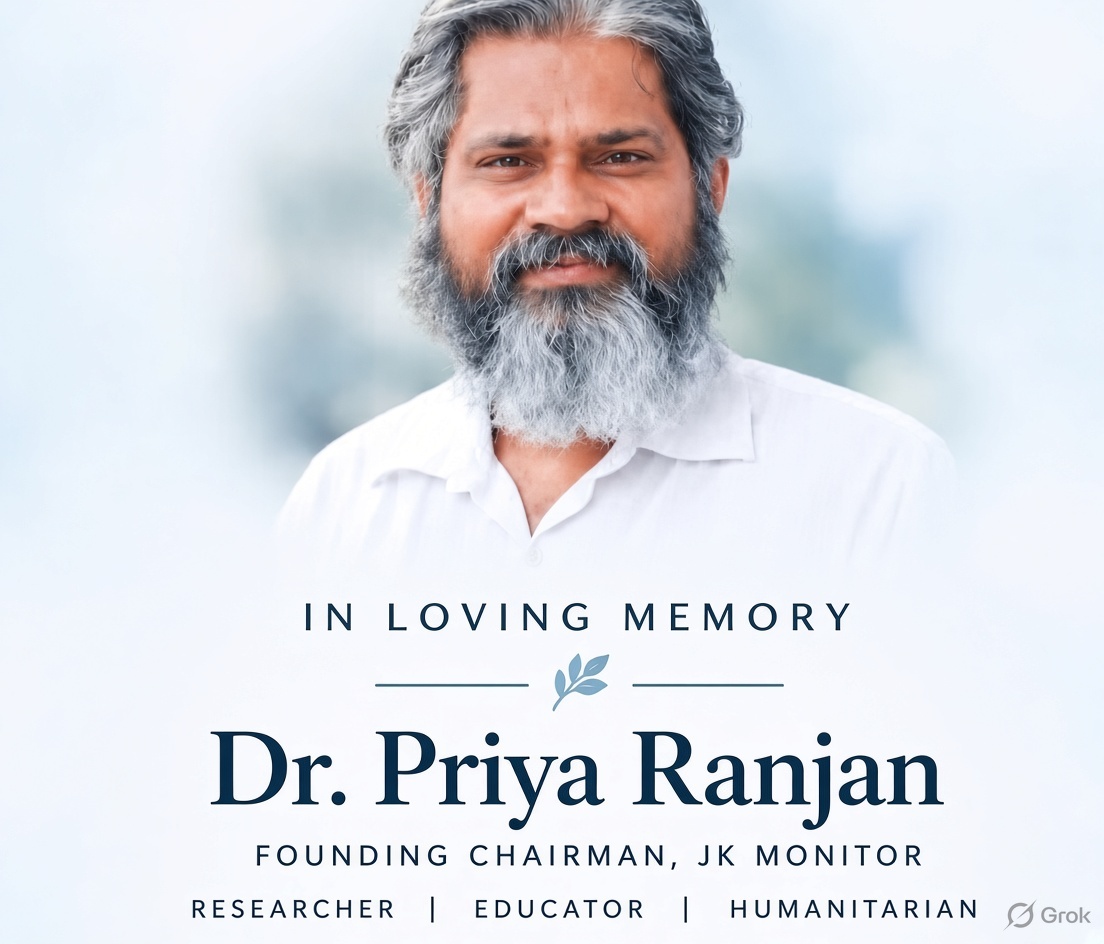 I will always remember Dr. Priya Ranjan not only as the Chairman of JK Monitor, but as a mentor, guide and elder brother whose kindness shaped my life and work. Write a tribute at
 In the quiet courtyards of Dogra households, before the first serving of Dhaam is ever ladled onto a pattal leaf plate, a small portion is set aside. The family waits—sometimes only moments, sometimes longer—for a black bird to descend. When the crow finally arrives, pecking at the offering, a quiet satisfaction settles over the gathering. The ancestors have eaten. Only then does the community feast begin.
This simple act, repeated across generations in the Jammu region, carries within it one of the most profound expressions of Dogra spiritual life: the belief that the crow is not merely a bird, but a living bridge between the world of the living and the realm of the pitrs—the ancestors.
A Bird That Carries the Souls of the Departed
The crow's association with ancestors is not unique to the Dogras. Across Hindu tradition, the crow is regarded as a vessel for ancestral spirits. The Garuda Purana and other scriptures describe the crow as a messenger of Yama, the god of death, and during Pitru Paksha—the fortnight dedicated to ancestral rites—it is believed that the ancestors themselves take the form of crows to accept the food offered by their descendants. The offering is not symbolic; it is understood as a direct transmission. What the crow eats, the ancestors receive.
The mythological roots of this belief are ancient. According to one well-known story, when King Marutta performed a great ceremony, Ravana appeared uninvited, causing the gods to flee in disguise. Yama, the guardian of Pitruloka, took the form of a crow to escape. Pleased with this form, Yama blessed all crows with the right to eat the rice offered to the pitrs. From that moment, the crow became the designated recipient of ancestral offerings.
In Dogra culture, this belief is not confined to annual Shraddha rituals. It is woven into the fabric of everyday life. As one Dogra elder from the Shivalik foothills explained, "When we feed the crow, we are not feeding a bird. We are feeding our father, our grandfather, our grandmother. They come to us in that form. If the crow does not come, we worry—have our ancestors not accepted our offering?"
Sharada: The First Meal Belongs to the Ancestors
The ritual of offering the first meal to the crow is especially pronounced during Sharada, the period of ancestral remembrance that culminates in Pitru Paksha. In Dogra households, no meal is complete without this offering. Before any family member eats, a portion is set aside—often on a leaf, a small earthen vessel, or a wooden shelf outside the kitchen window. The crow is called, sometimes with a distinctive cry, sometimes with a song.
In the Kashmiri Pandit tradition closely related to Dogra customs, this ritual takes the form of Kaw Punim, the "full moon of the crow," celebrated in the month of Magha. On this day, yellow rice is prepared and offered to crows on a special spoon-shaped structure made of sticks and grass. Children sing a song that captures the intimacy of the relationship:
O clever crow; O, the lover of khichri, crow;
Come to our new house along with your spouse;
Be seated on the threshold of our roof—
And partake of the salty pudding.
The song is not mere folklore. It is a prayer, an invitation, a reminder that the ancestors are always welcome in the home.
For the Dogras of Jammu, this ritual is not limited to festivals. It is a daily discipline. Many families keep a small portion of rice or roti aside each morning, placing it on a ledge or in the courtyard before the first meal is eaten. The crow is the first to eat. Only then does the family sit down to their own food. This practice, carried out without fanfare, is a quiet act of remembrance—a way of saying that the dead are not forgotten, that they remain part of the household.
The Crow and the Dhaam: Feeding the Ancestors Before the Community
Nowhere is this belief more visible than in the Dogra Dhaam—the grand community feast that accompanies weddings, festivals, and religious gatherings. The Dhaam is a culinary tradition unlike any other. Dishes are cooked in large copper vessels over a slow fire in a trench called a Dhaan, tended by the Sain, the traditional cook who holds a place of honour in the community. The food is served on pattals and doonas, biodegradable leaf plates and bowls, and guests sit in rows on mats, a practice that fosters equality and togetherness.
But before the Dhaam is served to the community, a portion is offered to the crow. This is not an afterthought. It is the first act of the feast. In many Dogra villages, the Sain or the eldest member of the family sets aside a small serving of rice, dal, or madra and places it in an open space—on a rooftop, a tree stump, or a specially designated spot in the courtyard. The crow is called. When it comes and eats, the offering is considered accepted. Only then are the guests served.
The theological logic is straightforward: the Dhaam is not just a meal. It is a sacred act of sharing, a reaffirmation of community bonds, and an acknowledgement of those who came before. To eat without first feeding the ancestors would be to break the chain of reciprocity that binds the living to the dead. As one Dogra priest from Udhampur explained, "The Dhaam is for everyone—the living and the dead. If we forget the dead, the feast is incomplete. The crow reminds us that we are not the only ones at the table."
The Crow in Dogra Life: Omens, Blessings, and Daily Presence
The crow's significance in Dogra culture extends beyond ritual offerings. In the villages of Jammu, the crow is a constant presence—a bird that is watched, interpreted, and respected. Its calls are read as omens. If a crow caws on the ridge of a house, it is believed to signal the arrival of guests. If a crow caws persistently, it may be a warning or a message from the ancestors. The Kaw is not a passive symbol; it is an active participant in the life of the community.
This relationship is reflected in Dogra folklore and daily speech. Children are taught not to harm crows, and elders often speak of them with affection. The crow is seen as intelligent, resourceful, and deeply connected to human life—qualities that make it a fitting messenger between worlds. In the Dogra imagination, the crow is not a bird of ill omen, as it is sometimes portrayed in other cultures. It is a beloved visitor, a carrier of blessings, a link to the past.
The Ritual of the First Loaf: Protection and Propitiation
There is another dimension to the crow offering in Dogra culture that speaks to its protective function. In some regions of the Dogra hills, particularly in areas where tantric practices are prevalent, the first loaf of bread or the first serving of food is offered to the crow (or to a dog) as a form of ritual protection. It is believed that if the first portion is set aside in the name of the crow, any negative force or spell directed at the food is neutralised. The crow, in this context, is not just a recipient of ancestral offerings; it is a guardian, a shield against malevolent forces.
This dual role—ancestral messenger and protective presence—makes the crow uniquely important in Dogra spiritual life. It is both a conduit to the past and a safeguard for the present. The act of offering the first meal to the crow is, at once, an act of remembrance, an act of devotion, and an act of protection.
A Tradition Under Threat, A Tradition That Endures
In recent years, the crow population in many parts of India has declined, and with it, the visibility of this ancient ritual. Urbanisation, changing food habits, and the loss of traditional courtyards and open spaces have made it harder for families to maintain the practice. Yet in the villages of Jammu, the ritual endures. The Dhaam is still prepared, the crow is still called, and the first portion is still set aside.
For the Dogras, this is not nostalgia. It is a living faith. The crow is not a relic of a bygone era; it is a present-tense link to the ancestors. Every time a crow descends to accept an offering, the boundary between the living and the dead grows thin. The ancestors are not distant; they are here, sharing the meal, blessing the gathering, reminding the living that they are part of a chain that stretches back through time.
A Call to Remember
As the sun rises over the Tawi and the first Dhaam of the wedding season is prepared, the Sain sets aside a small portion of rice. A child is sent to call the crow. The bird arrives, black against the morning sky, and eats. In that moment, the Dogra world is complete. The ancestors have been fed. The community can now eat.
This is the meaning of the crow in Dogra culture: not superstition, not mere custom, but a profound and beautiful expression of the belief that love and duty do not end with death. The crow is the messenger, the witness, the guest who never fails to arrive. And as long as the first meal is offered to the crow, the ancestors will never be forgotten.