

 Share your story and shine at JK Monitor!🌟 Welcome to JK Monitor, where every story matters and every achievement is celebrated! We invite you to share the remarkable journey of your life and showcase your accomplishments to the world. Join our exclusive interviews that honor exceptional individuals just like you.
 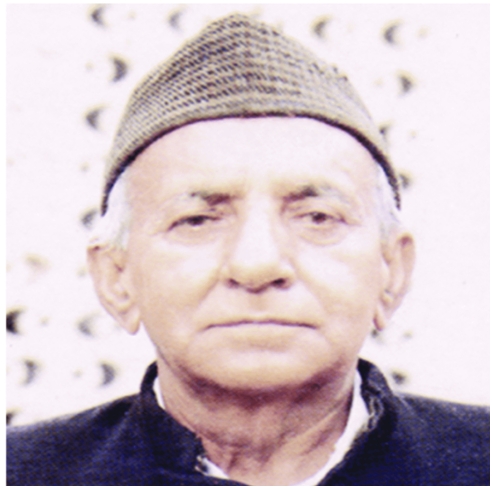 In the chronicles of Indian literature, certain names shine not merely for their artistic brilliance but for their role as catalysts of cultural awakening. Dinu Bhai Pant—poet, playwright, and cultural visionary—is one such name. For the people of Duggar, the Jammu region of undivided Jammu and Kashmir, he remains "The Pride of Duggar," a towering figure who gave voice to the voiceless and language to a land yearning for literary expression.
Born on May 11, 1917, in the village of Panthal (in present-day Reasi district), Dinu Bhai Pant emerged from humble beginnings in an orthodox family with meagre means. Yet from this modest soil sprang a genius who would reshape the literary destiny of an entire region. His journey—marked by personal tragedy, relentless determination, and an unshakeable commitment to his mother tongue—offers a profound lesson in how one individual's creative courage can ignite a cultural renaissance.
Early Life and the Crucible of Struggle
Pant's early years were shaped by hardship. In 1937, when he was just twenty years old, his mother passed away untimely, leaving the young man to navigate life's challenges with limited support. Despite this devastating loss, Pant pursued his education with remarkable determination. He completed his studies from Ranbir High School in 1939 and went on to pass the Bhushan and Prabhakar examinations in 1941—credentials that attested to his intellectual calibre even as he grappled with personal grief.
But Pant was not content with mere academic achievement. The world around him—the pain of common people, the struggles of farmers, the social and political upheavals of a region in transition—demanded a response. And response he did, with a pen that would become the conscience of Duggar. As one scholar notes, his poetry was "deeply rooted in the life of the common man... He gave words to the pain, struggles, hopes, and dignity of ordinary people."
The Awakening: 'SheharPaihlo-Pehal Gaye'
The year 1943 marks a watershed moment in Dogri literary history. It was then that Dinu Bhai Pant composed his revolutionary poem "Sheher pehlopehl" (also known as "SheharPaihlo-Pehal Gaye") under the genre of gitlu—a form of poetic titillation or tickle. But there was nothing frivolous about this poem's impact.
At the time, Dogri literature had no significant publishing forum. There were no literary magazines, no established platforms where a poet could share his work with the world. Undeterred, Pant took to the streets. He would visit various neighbourhoods of Jammu and recite his poem to anyone who cared to listen. And listen they did.
The poem's unprecedented popularity changed everything. As Prof. Lalit Magotra, President of Dogri Sanstha, later observed: "One of his very first poems 'SheharPaihlo-Pehal Gaye' changed the whole literary scenario and brought a revolution in the mindset of writers of that time. The unprecedented and phenomenal popularity of this simple poem inspired many writers of that era to write in their mother tongue."
What made this poem so revolutionary? The answer lies in its accessibility and its emotional resonance. "Shehr PailoPeahl Gaye" wove together themes of nostalgia and communal spirit, capturing the unique societal landscape of the Dogra people. It was not ornate or elitist; it spoke in the language of the people, about the people, and for the people. For the first time, Dogri speakers saw their own lives, their own emotions, their own struggles reflected in poetry that felt authentically theirs.
The poem's success was not merely literary—it was catalytic. It released what one commentator called "the pent-up creativity of the Dogri-speaking people." Writers who had previously hesitated to write in their mother tongue now found the courage to do so. A literary movement was born.
The Literary Arsenal: Poetry of the People
Following the success of "SheharPaihlo-Pehal Gaye," Pant continued to produce work that resonated deeply with the masses. By the early 1940s, he had already gained immense popularity through masterpieces like Mangu Di Chhabil, Gutlun, and Veer Gulab. These creations carried "the fragrance of the soil, the rhythm of rural life and the moral force of a society undergoing change."
Gutlun (which translates to "Titillation") proved to be an instant hit, setting off what can only be described as a chain reaction in Dogri poetry. It inspired a host of new writers and poets who devoted themselves to the Dogri language, bridging the cultural gap between rural communities and urban centres. Pant's poetry was not ornamental; it was alive with social concern, patriotic feeling, and human sensitivity.
His Mangu Di Chhabil (a collection of poems) and Veer Gulab (a khand kavya or epic poem) brought glory to the poet and gave unprecedented popularity to the Dogri language. These works were progressive in their outlook, focusing on common people's problems, expressing concern for the downtrodden, and advocating for their uplift.
Other notable works include Dadi Te Main (a poetry collection), the Dogri play Sarpanch, and the Urdu play Swarg Ki Khoj. Each of these works reflected his creative depth and his strong social vision—a vision that saw literature not as an escape from reality but as a tool for engaging with it.
The Playwright's Stage: Theatre of Social Conscience
Pant's genius was not confined to poetry. He was also a playwright of considerable merit, writing stage plays in both Dogri and Urdu and enriching the theatrical tradition of the region.
His Dogri play Sarpanch, based on the life of a folk hero, Data Ranpat (also known as Data Ranu), tells the story of a village headman who makes the supreme sacrifice for justice and to uphold the honour of his people. In 1962, the play received the Second Prize from the Jammu & Kashmir Academy, with a cash award of Rs. 700. It was staged widely by Dogri Sanstha at numerous places, earning acclaim for its strong dramatic qualities, realistic treatment, and engaging presentation of rural social life.
His Urdu play Swarg Ki Khoj further demonstrated his creative versatility and his willingness to explore philosophical and spiritual themes.
But perhaps his most significant theatrical achievement came in 1985, when Pant received the prestigious Sahitya Akademi Award for his play Ayodhya. In this work, Pant adopted a daring and unconventional approach, reimagining the character of Kaikeyi—traditionally depicted as a villain in the Ramayana—in a more sympathetic light. The play suggested that Kaikeyi had acted not out of malice but out of a vision about cultural interaction between Aryans and the kingdoms of Kishkindha and Sri Lanka, communicated to her by a sage. This bold reinterpretation demonstrated Pant's willingness to challenge established narratives and think independently—a trait that defined his entire literary career.
The Institution Builder: Founding of Dogri Sanstha
Pant's contribution to Dogri literature extended far beyond his own creative output. He was, fundamentally, an institution builder—a man who understood that for a language to flourish, it needed structures, platforms, and community.
In 1942, as part of the nationwide Hindi renaissance movement, Pant founded the Hindi Sahitya Mandal. This was followed two years later by an even more significant achievement. On the auspicious day of Basant Panchami in 1944, Pant joined forces with five other literary stalwarts—Prof. Ram Nath Shastri, Sansar Chand Baru, Bhagwat Prasad Sathe, Dharam Chand Prashant, and Narayana Dutt Mishra—to formally establish the Dogri Sanstha.
This was a historic moment for the Dogri language. The Dogri Sanstha became "a pioneer literary organization working for promotion of mother tongue Dogri," providing a powerful platform for the language and inspiring generations of writers to work for its dignity and recognition. It marked nothing less than the beginning of a renaissance in Dogri literature.
Service to Culture and Nation
Pant's commitment to language and culture was matched by his dedication to public service. He served as a Cultural Officer in the J&K Dehat Sudhar Department, working to promote and preserve the rich cultural heritage of Duggar. When a radio station was established in Jammu in 1947, Pant worked for some time as a staff artist and later as a casual scriptwriter.
In 1948, he was appointed Publicity Officer in the Rehabilitation Department, which was playing a crucial role in resettling hundreds of thousands of refugees during the turbulent period following Partition. He was made a Panchayat organiser in 1950 and, because of his intelligence, honesty, and dedication, was entrusted with numerous responsibilities, eventually being promoted to the senior cadre of the state government. He retired in 1978 as Deputy Provincial Rehabilitation Officer.
His political engagement was equally notable. As an organiser of the National Conference party, he participated in the Chenani agitation in 1945. He also associated himself with the Dogra Mandal in 1974. Throughout his life, Pant struggled, ideologically and practically, against tyranny and injustice.
The Man Behind the Legend
Behind the revolutionary poet and the committed public servant was a man of remarkable humanity. Pant was fully satisfied with his family life; his three sons and two daughters are well-settled. About his wife, he famously remarked that she had no complaint against him because, in her presence, he was a meek and docile husband.
This gentle domesticity stood in fascinating contrast to his public persona as a revolutionary poet who "called God a trap laid down by the thugs and fraudulent people" and was a supporter of dialectical materialism. Yet even this apparent contradiction revealed his essential humanity: when his wife arranged a special ritual for his well-being on March 23, 1992, Pant—though ideologically opposed to such practices—participated in it so that the sentiments of his family members would not be hurt and their faith would remain intact.
The Final Curtain
Tragically, the ritual proved prophetic. At about twelve noon on that very day, March 23, 1992, while half the ceremony was still in progress, Dinu Bhai Pant passed away. The poet who had given voice to a people, who had awakened a language, who had built institutions that would outlast him, was gone.
He was 74 years old.
The Legacy That Lives On
Dinu Bhai Pant left this world in 1992, but his immortal legacy lives on. Today, his birth anniversary is celebrated as a literary festival in Jammu. In 2026, on his 109th birth anniversary, Duggar paid tribute to its legendary poet, remembering him as "the poetic pride of Duggar" whose "literary legacy continues to inspire generations."
His influence can be seen in the continued vitality of Dogri literature, which has produced numerous Sahitya Akademi awardees following in his footsteps—from Padma Sachdev to Jitendra Udhampuri, from Kehri Singh Madhukar to Ved Rahi. The Dogri Sanstha that he helped found continues to work on its mission of promoting the language and offering platforms to aspiring talents from every corner of Duggar Pradesh.
Perhaps most remarkably, his poetry remains alive in the popular imagination. His iconic song "Mere Desai Da Shalaipa" is still performed, and his children's song "MakhnoMakhaneo" continues to delight young listeners. Theatrical adaptations of "Sher Pehlo Pahel Gaye" are still staged, proving that his words have lost none of their power to move audiences.
The Voice of a People
Dinu Bhai Pant was, in the truest sense, the voice of the people. His poetry captured their pain, their struggles, their hopes, and their emotions with rare sensitivity and brilliance. He portrayed the changing social and political landscape of Jammu and Kashmir with a clarity and compassion that few have matched.
As the tribute to him so eloquently states: "His words were the voice of the people, his plays were the mirror of society, and his life was a dedication to language, literature and culture."
In an age when regional languages face increasing pressure from dominant global tongues, the life and work of Dinu Bhai Pant serve as a powerful reminder of what is at stake when a language loses its voice—and what is possible when one brave poet decides to sing it awake. Through his poetry, his plays, his institutions, and his example, Pant ensured that Dogri would not merely survive but thrive, and that the people of Duggar would have a literature worthy of their history, their struggles, and their dreams.
The city he once sang awake continues to echo with his words. And as long as there are those who speak Dogri, Dinu Bhai Pant will never truly be gone.
"A pioneer poet, playwright and cultural visionary whose legacy continues to inspire."