Share your story and shine at JK Monitor!🌟 Welcome to JK Monitor, where every story matters and every achievement is celebrated! We invite you to share the remarkable journey of your life and showcase your accomplishments to the world. Join our exclusive interviews that honor exceptional individuals just like you.
 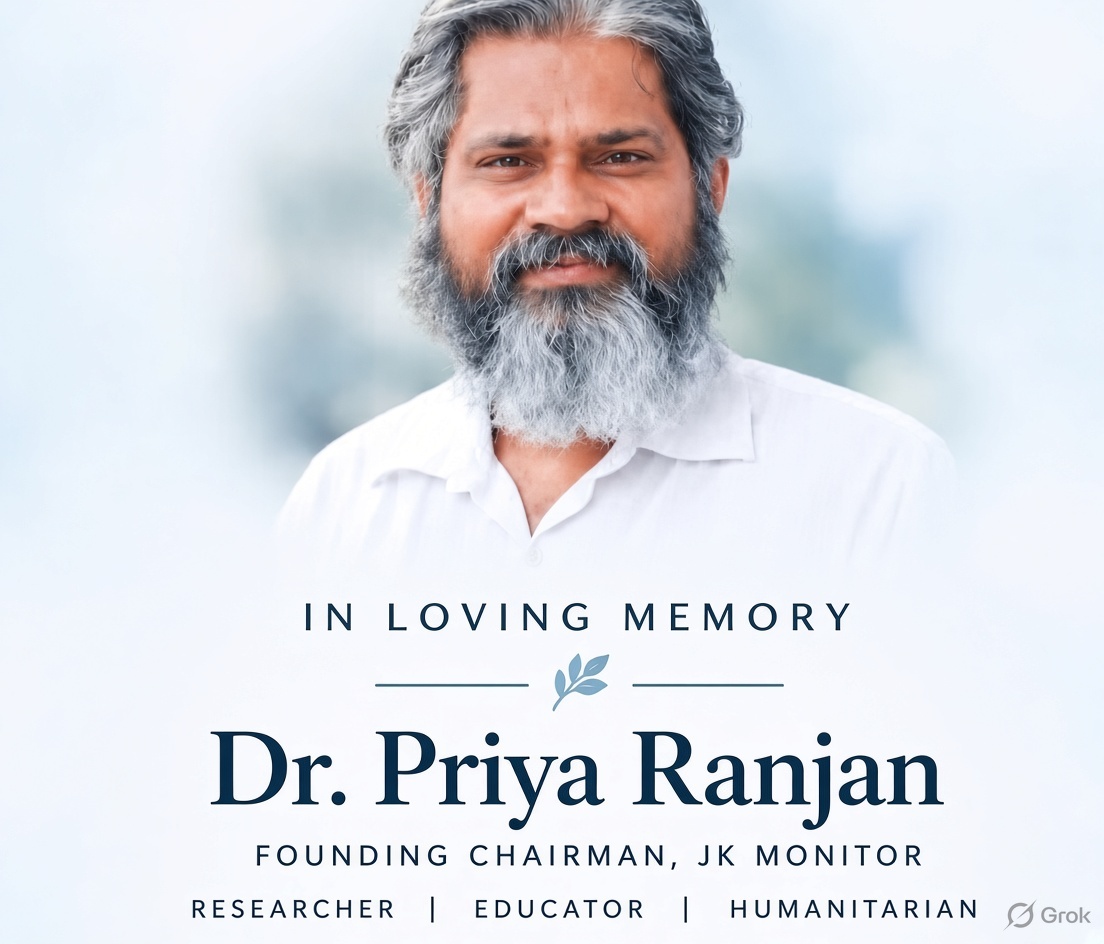 I will always remember Dr. Priya Ranjan not only as the Chairman of JK Monitor, but as a mentor, guide and elder brother whose kindness shaped my life and work. Write a tribute at
 - Speakers call for digital transformation, data-driven governance and student-centric administrative systems
GANDERBAL: Central University of Kashmir (CUKashmir), in collaboration with the Association of Indian Universities (AIU), kick-started a two-day national workshop on “Reimagining Higher Education Administration for Viksit Bharat@2047”, bringing together university administrators, and academic leaders from across the country to deliberate on administrative reforms, digital transformation and the evolving governance needs of India’s higher education system.
Academic administrators representing 35 institutions, including universities and other eminent higher education institutions, from 14 States took part in the programme, the first of its kind in Jammu and Kashmir.
In his Presidential address, Vice-Chancellor, Prof. A. Ravinder Nath, underscored the importance of institutional reforms, effective governance and strategic planning in strengthening the university system. Emphasising the need to align administrative practices with emerging academic priorities, he highlighted the importance of building responsive institutional mechanisms capable of supporting quality education, research, innovation and national development. CUKashmir VC observed that universities must continuously reassess their administrative structures and working methods to respond effectively to changing educational requirements.
Referring to successive education commissions and policy initiatives, he underscored the continuing relevance of reforms that strengthen both academic systems and institutional administration. Highlighting the fundamental purposes of a university, Prof. A Ravinder Nath observed that higher education institutions must focus on the creation of new knowledge through research, the dissemination of knowledge through academics, and the application of knowledge through outreach. He encouraged university administrators to adopt progressive practices, strengthen institutional capacity and work collectively towards achieving the vision of Viksit Bharat@2047.
In his special remarks, Central University of Rajasthan, Vice-Chancellor, Prof. Anand Bhalerao, who was the chief guest on the occasion, observed that classrooms, laboratories, research practices and student expectations were changing rapidly when compared to the continuing administrative practices developed several decades ago. “The objective is not merely a digitized university administration.
It is to redesign the administration so that it becomes an enabler of teaching, research, innovation and student success,” Prof. Bhalerao observed, underlining that technology adoption must be accompanied by a deeper transformation of institutional processes and administrative thinking. He stressed that administration should not be viewed merely as a support function but as an academic enabler that directly influences the quality of teaching and research. Pointing to the time students and faculty often lose navigating multiple offices, he called for a transition from hierarchical procedures to greater accountability, from fragmented offices to integrated services, and from physical files to digital workflows.
“Digital transformation must begin with administrative reforms and not merely with the purchase of software,” he remarked, urging universities to simplify processes, clarify responsibilities, strengthen data systems, train employees and establish service standards before automating their workloads.
Sharing examples from the Central University of Rajasthan, Prof. Bhalerao highlighted how data analysis and digital assessment could improve institutional performance and examination management. He said systematic analysis of performance indicators had helped the university identify gaps, strengthen graduate outcomes and improve its national ranking. He also cited the university’s experience of reducing the time taken to declare examination results to five days after completion of the final paper assessment.
Dean Academic Affairs, Prof. Shahid Rasool, Deans of Schools, Controller of Examinations, Finance Officer, and senior functionaries of the university were present.
Addressing the participants, AIU Secretary General Dr. Pankaj Mittal, who joined the programme online, in her special remarks congratulated CUKashmir for organising a workshop dedicated to higher education administrators, noting that such capacity-building initiatives were relatively uncommon compared with programmes organised for vice-chancellors and faculty members. Emphasising the transformative implications of the National Education Policy (NEP) 2020, Dr. Mittal said that higher education was undergoing a fundamental shift in its approach to teaching, learning, assessment and institutional governance.
Drawing a parallel with scientific revolutions, she observed that although the fundamental questions confronting education might remain unchanged, the answers required in the present context were entirely different. She stressed that the true spirit of multidisciplinary education lay not merely in the presence of different departments within a university but in enabling students to choose courses across disciplines. She also called upon universities to strengthen internship opportunities, facilitate multiple entry and exit pathways, and operationalise the Academic Bank of Credits to provide students with greater academic flexibility.
Highlighting the pivotal role of university administrators in implementing educational reforms, she remarked, “The registrars have to be torchbearers for any reform in higher education.” She further emphasised the need to strengthen administrative capacity, promote technology-enabled governance and ensure that administrative personnel received due recognition, professional development opportunities and institutional support.
In his welcome address, Registrar, Dr. Nisar Ahmad Mir, described the workshop as an important initiative to address the emerging challenges confronting higher education administration. He highlighted the contribution of universities to the country’s economic growth, social progress and technological self-reliance, while drawing attention to challenges relating to access, equity, quality, faculty availability, employability, infrastructure and the digital divide.
Dr. Mir observed that the implementation of NEP 2020 had significantly expanded the responsibilities of university administrators, requiring them to manage new academic structures, regulatory requirements, technological transitions and the changing expectations of students. He stressed the need to balance academic priorities with administrative responsibilities and encouraged participants to develop practical, collaborative solutions to shared institutional challenges.
Referring to the scale of India’s higher education system and its importance in realising the national development vision, Dr. Mir said that administrators must work collectively to ensure that universities remained responsive to the needs of students, society and the economy. He also expressed gratitude to the Vice-Chancellor for encouraging the university to take the lead in organising the national-level initiative and to the AIU for its collaboration.
Deputy Registrar, Dr. Javid Ahmad Wani who conducted the programme proceedings, said, the workshop will feature deliberations on contemporary administrative practices, technology-enabled governance, institutional planning, quality assurance, regulatory frameworks and capacity building. Deputy Registrar. Mr. Abdul Rashid Bhat proposed the vote of thanks.