

 Share your story and shine at JK Monitor!🌟 Welcome to JK Monitor, where every story matters and every achievement is celebrated! We invite you to share the remarkable journey of your life and showcase your accomplishments to the world. Join our exclusive interviews that honor exceptional individuals just like you.
  Poonch—known in older times as Parnotsa—was an ancient hill kingdom. It was located at Latitude 33°-45' and Longitude 74°-9', at a height of about 3,300 feet above sea level. This region had its own political and cultural identity long before the famous Chinese Buddhist traveller Hieun-Tsang came here in 633 A.D.
At that time, the kingdom was spread around the beautiful valleys of the Poonch Tohi River and its smaller streams. These rivers gave water to the fields, helped people settle, and supported early farming and trade. Because it was surrounded by hills and river systems, and stood at a higher level than the plains, Parnotsa grew safely as a small but organised state even before foreign travellers started writing about it.
A MOUNTAIN PRINCIPALITY BETWEEN EMPIRES
Hidden among the mountains of the Pir Panjal range, the region we call Poonch today was once a proud hill kingdom. Long before modern borders and roads, this land stood between the Jhelum and Chenab rivers and lay on old routes used by traders, armies, and travellers.
THE GATEWAY OF PASSES, RIVERS AND KINGDOMS
The old state of Parnotsa—later called Punch or Poonch—lay in the valleys of the Poonch Tohi River and its tributaries.To the north was the Pir Panjal Range, to the east was Rajapuri (Rajouri), to the south were the Punjab plains & to the west flowed the Jhelum River
An important route from Bhimbar in the plains to Kashmir passed through the south-eastern corner of Poonch. This gave the area a lot of importance, because it became a natural gateway between the plains and the valley.
The town of Poonch itself stands on a gentle slope on the northern side of a wide valley, above the right bank of the Poonch Tohi, close to where it meets the Bitarh. It lies about halfway between Bhimbar and Srinagar, along the road through the Suran valley and the Haji Pir Pass. Kotli is about 20 miles away and can be reached either along the Poonch Tohi or by crossing the Sona and Nandheri passes via Mankot.
The present Poonch district is divided into six tehsils: Haveli, Mendhar, Surankote, Mandi, Balakote and Mankote. To its north and north-east lie Baramulla and Pulwama districts of the Kashmir valley, to its north-west lie Pakistan-occupied areas, and to the south lies Rajouri. After 1947, half of Haveli tehsil and the entire Bagh and Sudhmutta tehsils of the old Poonch state went under Pakistan’s control.
A KINGDOM OF MANY NAMES, ONE LINEAGE
Over time, Poonch has been known by many different names, showing how languages and rulers changed. The earliest name was Parnotsa, Alexander Cunningham wrote it as Punacha or Punach, Kashmiris called it Proons, Hieun-Tsang wrote Pun-nu-tso, Moorcroft used Prunch or Pruntz, General Court also wrote Prunch, Mirza Mogal Beg called it Punja & The traveller Vigne wrote Punch, which later became Poonch.
By the middle of the 19th century, Poonch was already a small but lively centre. It had a government garden, two Colleges for Hindus , two mosques, and two Muslim shrines (Ziarats)—those of Sayed Gufur and Ali-Parka Takia. This shows that people of different faiths lived side by side and shared public spaces.
LOHARA – THE FIRST CROWNED CAPITAL
The earliest capital of the state was Lohara, now known as LORAN, to the north-east of today’s Poonch town. The state lay in a hilly region called Darvabhisara, between the Jhelum and Chenab rivers, and was probably one of the first organised states in this belt.
The Chinese pilgrim Hiuen-Tsang, who passed through the region in 633 A.D., mentions this area in his travel record. When he came down from Kashmir towards the plains, he passed through Poonch and Rajouri and then towards Sialkot, probably via Akhnoor. At that time, Poonch was under the control of Kashmir and did not have its own independent king.
He described the country as having a boundary of about 2,000 li (around 333 miles). This is more than its real size, but it shows that the land made a strong impression on him.
The famous Kashmiri chronicle Rajataringini also mentions Parnotsa (Poonch). It describes it as a feudatory state under Lalitaditya Muktapida of Kashmir (late 7th century A.D.), who is said to have founded or organised Parnotsa as part of his kingdom.
THE HOUSE OF LOHARA AND THE FALL OF THE SHAHI SWORD
According to Sir Aurel Stein, the Lohara state (Poonch) was founded by Nara around 830 A.D. He was probably a small local chief from the Khasha tribe. Nara ruled till about 870 A.D., after which his son Naravahana became ruler till around 890 A.D.
Naravahana lived at the same time as Sankravarman, the king of Kashmir. When Sankravarman returned from a military campaign against Gujara (in the Punjab region), he suspected Naravahana of disloyalty and had him and his supporters killed.
After Naravahana, the throne went to Phulla, then Satavahana, Chanda, Chandaraja, and then Sanha Raja. Sanha Raja is remembered as one of the notable rulers. His daughter Didda married into the royal family of Kashmir and later became a powerful queen there.
Sanha Raja’s son Udayaraja died around 1000 A.D. His son Vigraharaja then became ruler of Lohara.
This period was also the time when the Hindu Shahi kings of Punjab were trying to stop the advance of Mahmud Ghaznavi from the west. The Shahi rulers—Jaipal, his son Anandpal, and grandson Trilochanapal—fought Mahmud but lost many battles. After defeats in the plains near Peshawar and the Indus, they often retreated into the hills, towards the Poonch Tohi valley and Lohara.
Some of their final battles were fought near the junction of the Tohi and the Jhelum. These defeats slowly ended the power of the Shahi kings in the early 11th century.
THE LOHARA KINGS: GUARDIANS OF THE HILL THRONE
i) Vigraharaja (c. 1000–1030 A.D.)
When Mahmud of Ghazni was invading India, Vigraharaja was ruling Lohara. He was probably inside the Lohara fort on at least two occasions when it was attacked. He ruled for a long time and outlived his brother Sangramaraja, king of Kashmir, who died in 1028 A.D. Vigraharaja tried to capture the throne of Kashmir but was killed in a clash with the Kashmiri army.
ii) Kshitiraja (c. 1030–1065 A.D.)
After Vigraharaja, his son Kshitiraja became ruler. Towards the end of his rule, his relationship with his son Bhuvanaraja became bitter. Bhuvanaraja fled to Nilapura (probably near modern Jammu), gathered an army, and attacked his father with help from the rulers of Rajapuri (Rajouri) and Nilapura.
Kshitiraja defeated them. Tired of wars and politics, he handed over his kingdom to Utkarsha, an infant grandson of the Kashmiri king Ananta Deva, and then retired to Chakradhara, a shrine in Kashmir, where he spent the rest of his life in prayer and study.
iii) Utkarsha (c. 1065–1089 A.D.)
Utkarsha ruled Lohara for about 24 years. In 1089 A.D., he was called to Kashmir to be declared heir to the throne instead of his elder brother Harsha, who was then in prison. But Harsha escaped and was made king by his supporters. Afraid that he might be killed, Utkarsha committed suicide at the young age of 24.
After his death, Lohara slowly lost its independence and started being treated mostly as a province of the Kashmir kingdom, though it continued to play a big role in Kashmiri politics.
Two later princes of Lohara—Uchchala and Sussala—great-great-grandsons of Kantiraja (Queen Didda’s younger brother)—became very important. They attacked Kashmir, defeated Harsha, and took control of the kingdom. Uchchala became king of Kashmir in 1101 A.D. and gave Lohara to his brother Sussala. When Uchchala was murdered in 1111 A.D., Sussala later became king of Kashmir himself and fully joined Lohara with Kashmir.
FROM HILL SOVEREIGNS TO SUBJECTS OF SULTANS AND EMPERORS
The next important reference to Lohara comes in the time of the Sultans of Kashmir, after 1339 A.D. During the reign of Kutbuddin (1373–1389 A.D.), Lohara was still ruled by a Hindu Rajput chief, called the “Lord of Lohara”. He seems to have belonged to the old ruling family and had enough power to scare away a Kashmiri army sent against him earlier, in the reign of Shahabuddin.
Later, during the rule of Zainul Abidin (1420–1470 A.D.), a general named Haji Khan was sent to conquer Lohara. He succeeded, and this likely ended the old Hindu dynasty of Lohara around 1450 A.D.
Haji Khan is believed to have shifted the capital from Lohara to Poonch. After this, Poonch remained part of the territory ruled directly by Kashmir. When the Mughals took Kashmir in 1586 A.D., the lower part of the Tohi valley was made into a separate state, with Kotli as its capital, ruled by a branch of the Kashmir royal family.
THE MUSLIM RAJAS OF POONCH: A NEW DYNASTY IN THE HILLS
As the old fort of Loharakot grew weaker due to many attacks and damage, Poonch town slowly became the main centre of power. The first clear mention of Poonch as a capital appears during Zainul Abidin’s time, around 1450 A.D.
Sarajuddin Khan settled in Kahuta, where he married the daughter of a local Gujjar officer, titled Chaudhary. After his father-in-law’s death, he inherited his land and title. His talents caught the eye of the Mughal emperor Jahangir, who made him the ruler of Poonch and gave him the title of Raja.
His son Fateh Mohammad Khan became ruler after him. He faced many internal revolts and repeated clashes with the Subedars (governors) of Kashmir. Around 1700 A.D., he was killed while trying to crush a rebellion led by Janun Khan Maldyal. During his rule, he also made an agreement with the Khakha chiefs of Uri to fix the border of Poonch in that direction.
FORT-BUILDERS, TITLE-HOLDERS AND THE INTRIGUES OF COURT
i) Raja Abdul Razzak
Fateh Mohammad Khan was followed by Raja Abdul Razzak. He is remembered for building the famous Poonch Fort and for adding many villages in Mirpur, Kotli and Chibhal to his state.
After his death, his Wazir, Latifullah Tarkhan, was powerful enough to take over the throne. When the governor of Kashmir heard this, he asked Raja Islam Yar Khan to take control of Poonch. Latifullah was removed, and Ali Gohar Khan, the son of Abdul Razzak, was accepted as the rightful ruler.
ii) Raja Ali Gohar Khan (Rustam Khan)
With help from the Afghan governor of Kashmir, Ali Gohar Khan regained the state and took the royal title Rustam Khan. He invited scholars and skilled workers to come and live in Poonch and renamed the town Rustam Nagar after himself.
He acted quite independently and even made direct contact with the ruler of Kabul. In 1785, he captured a rebel Afghan governor of Kashmir and sent him to Amir Timur Shah of Kabul. In return, Amir Timur Shah honoured him with several grand titles. Rustam Khan ruled for about 28 years and died in 1788.
iii) Raja Shahbaz Khan (1788–1792 A.D.)
Rustam Khan’s eldest son, Raja Shahbaz Khan, then came to the throne. He was a Hafiz of the Qur’an (one who has memorised it). During his short rule, he defeated an attack by Raja Karamullah Khan of Rajouri. He ruled only about five years and died in 1792 without a male heir. His youngest brother, Raja Khan Bahadur Khan, then became the ruler.
iv) Raja Khan Bahadur Khan
Under him, a man named Ruhullah Khan became very influential. He had come from Muzaffarnagar as a hookah-bearer in the service of Raja Rustam Khan but rose to the powerful post of Wazir. He joined hands with the governor of Kashmir, Abdullah Alkozai, in a plot against the Raja. Khan Bahadur Khan was poisoned, and Ruhullah put his own son Amir Khan on the throne, while he himself controlled the government.
At this time, Maharaja Ranjit Singh in Punjab was growing stronger. By around 1810, he had already brought many hill states east of the Chenab under his control and then turned his attention to those in the west. In 1813, Ranjit Singh personally led an army to Poonch, while another Sikh force came over the Pir Panjal. Ruhullah’s army managed to push them back, but before leaving, Ranjit Singh is said to have set Poonch town on fire and returned to Lahore. When Ranjit Singh conquered Kashmir in 1819, the ruler of Poonch supported the Afghans. After the Afghans were defeated, the ruler of Poonch lost favour. Ruhullah Khan died in 1819, and Raja Amir Khan in 1823.
DOGRA ASCENDANCY AND THE LAST PHASE OF THE KINGDOM
i) Raja Mir Baz Khan (1823 A.D.)
After Amir Khan, his son Raja Mir Baz Khan became ruler. But by then, Gulab Singh, the famous Dogra general of Ranjit Singh, had taken over Poonch. Mir Baz Khan was called to Lahore, where he was murdered, likely due to plots by his enemies. Ranjit Singh then gave a jagir (land grant) in Poonch to Sher Baz Khan, head of another branch of the same family. His descendants held this land till 1947, with Raja Ghulam Mohai-ud-Din of Sadhrun as the last jagirdar.
Soon after 1819, Poonch was granted as a fief to Raja Dhian Singh, a powerful Dogra noble. In 1828, he received the title Raja of Bhimber and Chibhal (Poonch). He remained in control of Poonch until his death on 15 September 1843. Gulab Singh continued to manage the family estates, including Poonch.After the death of Dhian Singh’s son Hira Singh, the Khalsa Government took over Chibhal, Poonch, Kotli, Saila and Behram Gala in 1845, and gave them first to Faiz Talab Khan and later to Sardar Chatar Singh.
After the First Anglo–Sikh War (1845–46), the British forced the Sikhs to give up several territories. The hill tracts, including Poonch, were handed over to Gulab Singh in March 1846, forming part of the princely state of Jammu and Kashmir.
THE POONCH JAGIR UNDER THE HOUSE OF RAJA MOTI SINGH
In the 19th century, the story of Poonch mainly revolves around the Poonch Jagir and the Dogra rulers Raja Jawahir Singh and Raja Moti Singh, younger brothers of Hira Singh. Both were given the title of Raja by Maharaja Gulab Singh and were granted the territories of Chibhal, Poonch, Chalayar, Danala and several other villages. At first, they had to pay certain levies and nazrana (tributes), but these were later removed.
Raja Jawahir Singh remained unhappy and often complained of bad treatment. He also listened to bad advice from some of his followers. Raja Moti Singh, on the other hand, made peace with his uncle, Maharaja Gulab Singh, and kept good relations with him.
Because of their quarrels, the Board of Administration for Punjab divided the estate between the two brothers on 30 August 1852. This made Jawahir Singh even more unhappy.
He encouraged his people to revolt. In April 1855, the Jammu court sent forces into Poonch. They captured several of Jawahir Singh’s forts, though these were later returned to him after the British intervened. Still, he did not stop plotting. After Gulab Singh died in 1857, he conspired against the new Maharaja Ranbir Singh.
Finally, in 1859, Jawahir Singh was forced to abdicate in favour of his younger brother Raja Moti Singh and was exiled from the state.
From that time, the Poonch Jagir was firmly under the rule of Raja Moti Singh. At its largest, it covered more than 1,600 square miles (about 2,560 sq. km), between 33°-5' and 34°-2' North latitude and 73°-5' East longitude. It was divided into seven tehsils: Haveli, Mendhar, Purawa–Thakiata, Baghan, Parl, Panjsura and Sudrun.
POONCH TODAY: A BORDERLAND THAT CARRIES ITS PAST INTO THE PRESENT
Today, the old hill kingdom of Parnotsa lives on in the modern district of Poonch in the Union Territory of Jammu and Kashmir. The royal courts, jagirs and feudal titles have gone, but the landscape and memory of those times still shape daily life.
The rivers that once carried the armies and caravans of kings now water fields of maize, wheat and orchards. The same mountain passes that saw war elephants, horsemen and marching infantry now see buses, army convoys and traders travelling between Jammu, the border areas and the Kashmir valley.
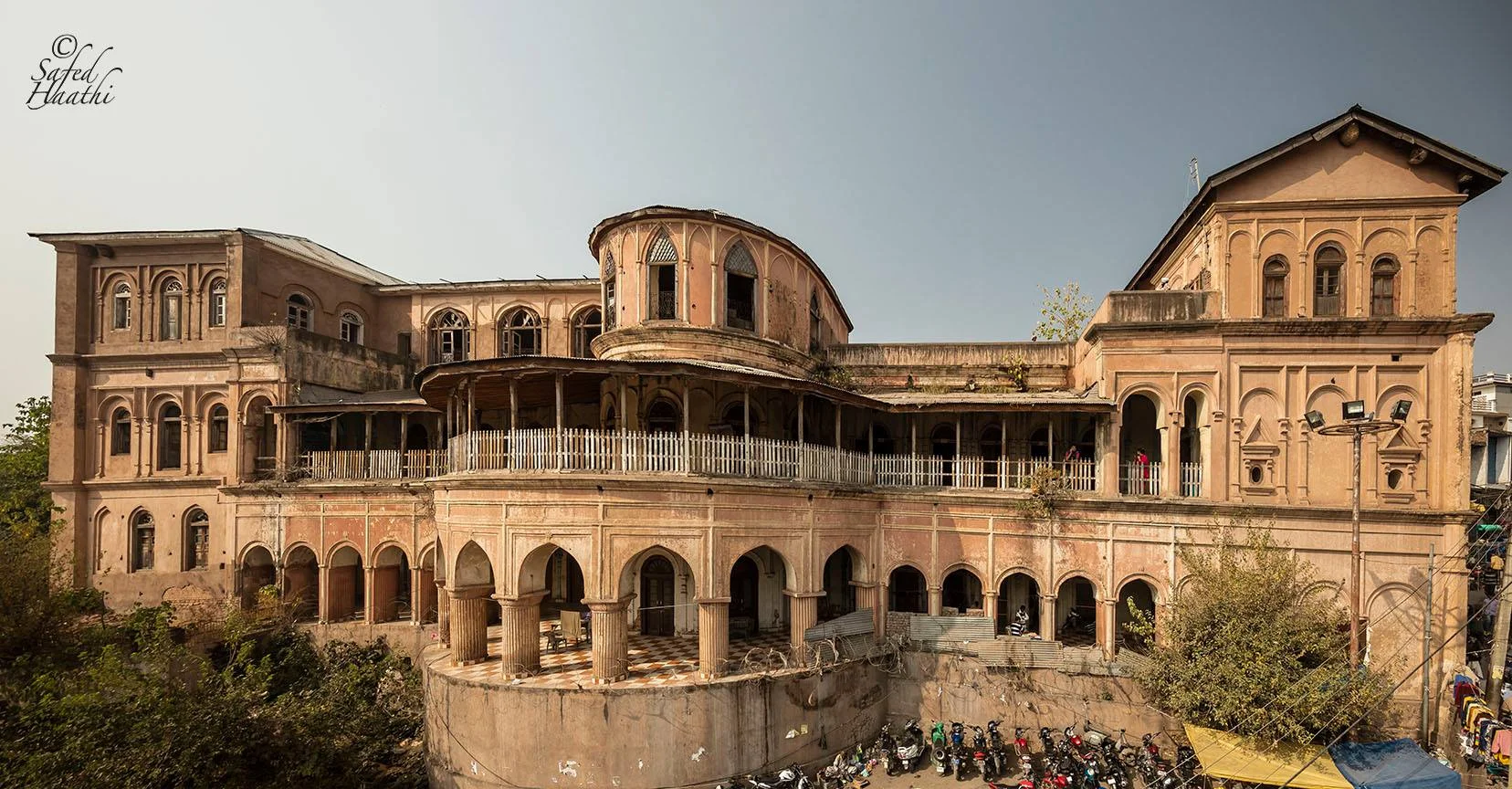
The old Poonch Fort, begun under the Muslim Rajas and expanded by later Dogra rulers, still rises above the town as a powerful symbol of this layered history. But today, this once-majestic fort is in a devastating and neglected condition. Crumbling walls, broken structures and lack of proper maintenance threaten to erase centuries of architectural and cultural memory.
If timely steps are not taken for scientific conservation and careful restoration, Poonch risks losing one of its most important historical landmarks. Repairing and preserving the fort is not just about saving old stones; it is about protecting the collective memory of the region, creating space for tourism, education and cultural pride, and passing on a visible link to the past for future generations.
The names of tehsils like Haveli, Mendhar, Surankote and Mandi still match the old territorial units that once formed the Poonch Jagir. Modern roads, schools, mobile towers and government offices have replaced the old courts and royal gardens, but behind them lie the same valleys of Poonch Tohi and the same Pir Panjal ridges that Hieun-Tsang, the Shahi kings, the Lohara rulers, the Sultans, the Mughals, the Afghans, the Sikhs and the Dogras once crossed.
For the people of Poonch today, the story of Parnotsa is not just distant history. It is part of their identity—a reminder that this quiet, often-forgotten corner of the mountains has, for more than a thousand years, stood at the crossroads of kingdoms, faiths and empires. The condition of Poonch Fort now tests our sense of responsibility: whether we are willing to preserve this rich inheritance, or allow time and neglect to bury it forever.
- The writer Shahid Ahmed Hakla Poonchi is a Published Writer in the daily leading newspapers of J&K and an Independent Researcher. He can be contacted at shahidhakla360@gamil.com