

 Share your story and shine at JK Monitor!🌟 Welcome to JK Monitor, where every story matters and every achievement is celebrated! We invite you to share the remarkable journey of your life and showcase your accomplishments to the world. Join our exclusive interviews that honor exceptional individuals just like you.
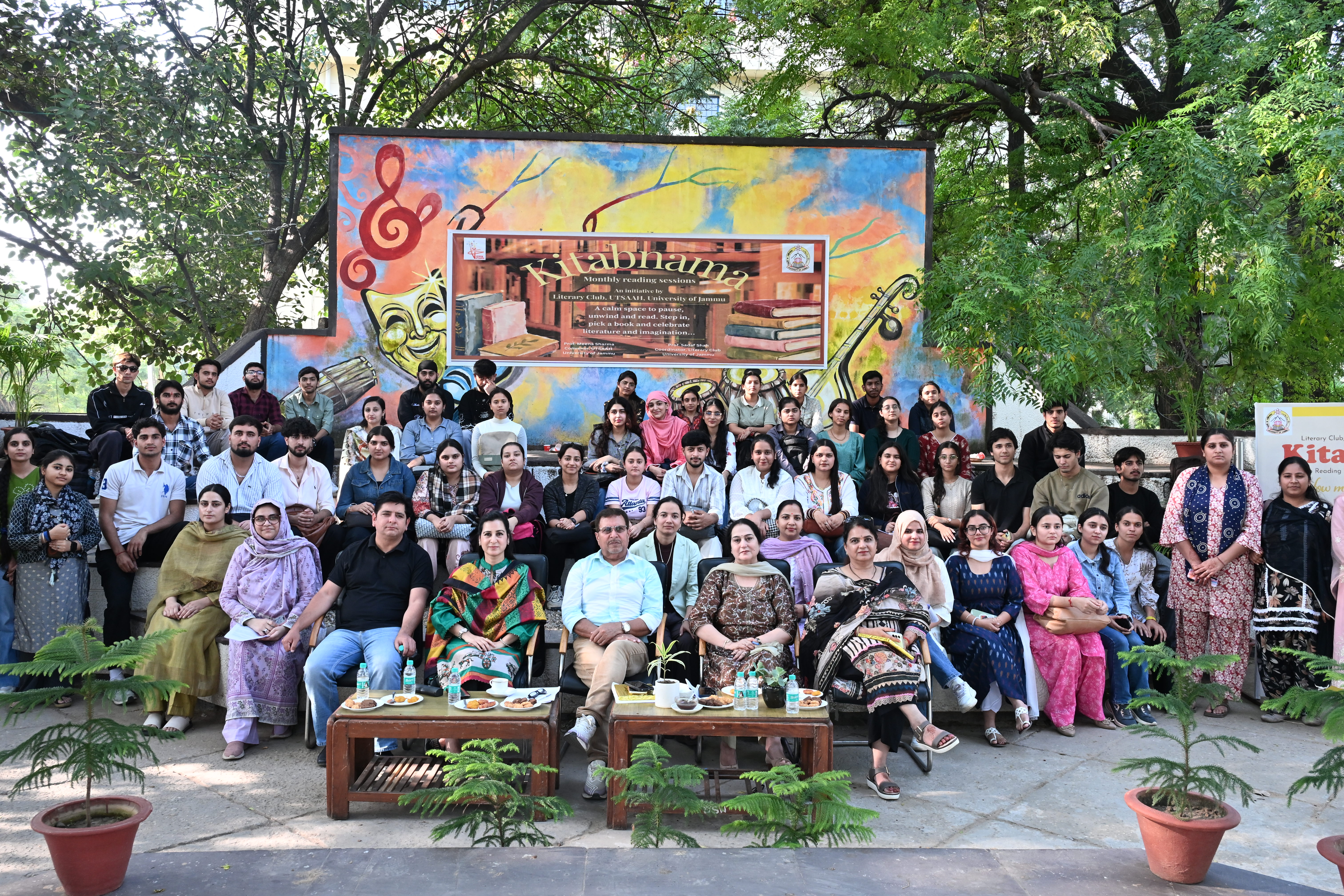
JAMMU: The Literary Club, University of Jammu, under the aegis of Utsaah, organised the second session of ‘Kitabnama’, a group reading initiative, at the Padma Sachdev Sur Samvad Rangsthal. Dedicated to renowned Russian writer Leo Tolstoy on the occasion of his death anniversary month, the session focused on his celebrated short story How Much Land Does a Man Need?
The programme witnessed enthusiastic participation from students across various departments of the University, providing a shared platform for reading, reflection and literary dialogue. Prof. Meena Sharma, Convener, Utsaah, formally welcomed the Chief Guest, Dr. Naseeb Singh Manhas, eminent writer and former Director of Doordarshan, along with faculty members and students. In her welcome address, she highlighted the significance of the initiative and its role in fostering literary engagement among students.
The highlight of the session was a live reading of the short story by a student narrator, followed by an interactive open-floor discussion. Students shared their interpretations and reflections, drawing parallels between the protagonist’s insatiable desire for land and contemporary materialistic pursuits. The discussion enabled participants to explore literature beyond conventional classroom settings through collective reading and dialogue.
Interacting with the students, Chief Guest Dr. Naseeb Singh Manhas appreciated the continued efforts of the Literary Club and emphasised the enduring relevance of classical literature in understanding society and human relationships. He encouraged students to cultivate a regular habit of reading and writing and to engage with literature through critical reflection.
Prof. Sadaf Shah, Coordinator, Literary Club, presented the formal vote of thanks, expressing gratitude to the Chief Guest, faculty members and students for their presence and active participation. The ‘Kitabnama’ initiative aims to promote reading habits among students by providing a shared platform for literary engagement, critical thinking and meaningful dialogue, thereby strengthening the culture of reading on the University campus.

