

 Share your story and shine at JK Monitor!🌟 Welcome to JK Monitor, where every story matters and every achievement is celebrated! We invite you to share the remarkable journey of your life and showcase your accomplishments to the world. Join our exclusive interviews that honor exceptional individuals just like you.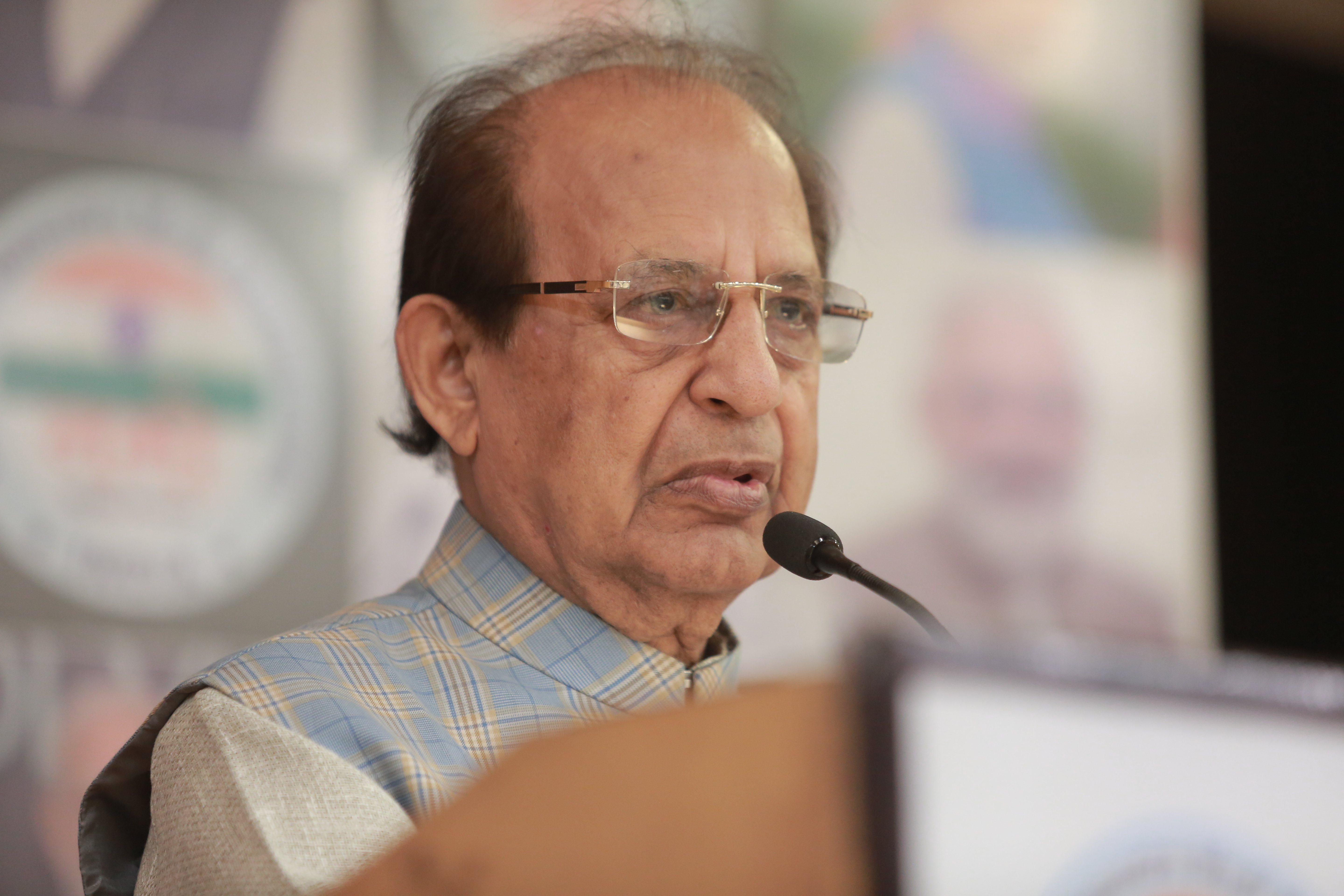
 Professor Jagdish Mukhi is the kind of leader who makes you feel at ease the moment he walks into a room—calm, grounded, and deeply genuine. He carries the warmth of a teacher, the steadiness of a seasoned public worker, and the honesty of a man who has never forgotten his simple roots. When he speaks, his words do not try to impress; they try to connect, guide, and reassure. Prof. Jagdish Mukhi’s public life is a reminder that leadership does not always need loud voices or constant publicity.
Sometimes, the strongest leaders are the ones who work quietly, consistently, and with complete honesty. In an age where politics often becomes noisy, his journey stands out as an example of calm duty and disciplined service. He represents a generation that believed real change comes from steady work, not from showmanship. His career is not just a list of posts he held; it is a story of how values shape a person’s entire path.
What makes him different is the honesty of his beginnings. Born on 1st December 1942, he grew up at a time when simplicity was the norm and hard work was the only path forward. These early influences never left him. Throughout his long public life, he carried the habits of a disciplined teacher and the commitment of a national worker. Even when he became Governor or held ministerial positions, he lived like an ordinary man with extraordinary responsibility. That humility is rare today.
Before entering full political life, Prof. Jagdish Mukhi spent years as an academic. This background shaped every part of his leadership. He had the patience of a teacher, the clarity of a scholar, and the habit of breaking down complex issues into simple steps. People who worked with him often say that even in tense meetings, he would speak softly and guide discussions without ego. This quality came from his belief that listening is more powerful than speaking.
In Delhi, the people of Janakpuri trusted him for more than two decades, electing him again and again from 1993 to 2015. This is not possible unless a leader builds genuine bonds with the community. He did not depend on slogans; he depended on daily work—solving small problems, meeting residents, helping institutions, and staying accessible. For many families, he became a familiar figure, someone they could speak to openly. That human connection is what true leadership looks like.
As Minister of Finance, Planning, Excise and Taxation, and Higher Education in Delhi, he handled both numbers and ideas with equal confidence. Finance is about discipline, controlling waste, and ensuring public money is used fairly. Higher education is about imagination, helping young people dream bigger. Managing these diverse roles shows his balanced mind. He believed that a city becomes strong when it invests responsibly and when its youth get the best opportunities.
His appointment as the Lieutenant Governor of the Andaman and Nicobar Islands further showed the trust the nation placed in him. The islands are beautiful but challenging. They require a leader who understands administration, culture, and the strategic importance of the region. Prof. Mukhi approached the role not as a distant authority but as someone willing to learn from the local people. He created smoother coordination between different departments and always kept public interest above bureaucracy.
When he became the 28th Governor of Assam in 2017, he entered a region full of culture, diversity, and complex political realities. Governing a state like Assam needs patience and sensitivity. Prof. Mukhi brought both. He met local groups, students, community elders, and officials with respect. People found in him a leader who would listen first and decide later. His calm presence brought stability during times of social and political change.
His additional charge as Governor of Nagaland and earlier as Governor of Mizoram proved his ability to handle delicate regions. These states require a leader who understands that harmony is built through dialogue, not pressure. Prof. Mukhi respected the cultural uniqueness of the Northeast. Instead of imposing decisions, he encouraged cooperation. His leadership strengthened trust between communities and the government.
His long association with the Bharatiya Janata Party and the Rashtriya Swayamsevak Sangh shaped his values but never overshadowed his humanity. He believed that public service should be free from anger and arrogance. He combined ideological clarity with deep compassion. Even critics respected him because he never used power to divide; he used it to guide and support.
His simplicity remained unchanged. He avoided glamour and preferred meaningful work. In today’s political climate, where visibility often matters more than sincerity, he became a rare example of a leader who stayed grounded. His life showed that a person’s true strength is measured not by how loudly they speak but by how responsibly they act.
Education always remained close to his heart. Whether as a minister or governor, he encouraged universities and colleges to think beyond textbooks. He wanted young people to be confident, ethical, and socially aware. He often told students that education is not just about passing exams but about shaping character. This belief came from his own years as a teacher.
Financial discipline was another area where he made a major contribution. He treated public money as a sacred trust. He fought wasteful spending and insisted on transparency. For him, a budget was not just a document—it was a moral responsibility. His efforts helped create better systems of accountability wherever he served.
Colleagues describe him as someone who could calm a room with just his presence. He did not raise his voice because he did not need to. His maturity was visible in the way he handled disagreements. Instead of forcing decisions, he persuaded people with reason. This skill made him especially effective in the Northeast, where social understanding is as important as politics.
Despite holding some of the highest positions in the country, he remained deeply human. He did not surround himself with unnecessary attention. He treated staff, students, officers, and visitors with equal respect. This behaviour created trust. People approached him freely because they knew he would listen without judgment.
Professor Jagdish Mukhi’s legacy is built on decades of steady, responsible service. His life teaches that leadership is a long journey of duty. He showed that a calm mind, a clean heart, and a disciplined life can do better than loud promises. In today’s fast-changing political world, his example is a reminder that real strength lies in sincerity, patience, and the constant desire to serve the nation.
(Author is Professor and Chairman Centre for NaMo Studies (CNMS) Email: profjasimmd@gmail.com )